Bara Katra (Great Caravanserai) is one of the oldest buildings in Dhaka, Bangladesh and a historical and architectural monument,
The word Katra may have originated from Arabic word Katara which means colonnaded building. ‘Katra/ katara’ in Arabic and in Persian means ‘Caravan (Karwan) Sarai’ or simply a ‘Sarai’ which using refers to resting place. The word bara means large.
Bara Katra refers to a palatial building dating to the reign of the Mughal dynasty in the Bengal Region. It is located to the south of Chowk Bazaar, close to the north bank of the river Buriganga, that flows past the southwest outskirts of Dhaka city.
Bara Katra is reported to have been built between 1644 and 1646 AD by Mir Abul Qasim, the diwan (chief revenue official) of Mughal Prince Shah Shuja, the second son of the Mughal Emperor Shah Jahan and Empress Mumtaz Mahal. He was the governor of Bengal and Odisha and had his capital at Dhaka. The building follows the traditional pattern of Central Asian caravanserais and is embellished as per Mughal architecture. Originally it was enclosed a quadrangular courtyard.
Abul Qasim al-Husaini at-Tabtaba as-Simnani built this edifice, endowing it with twenty-two shops, attached to it, on the rightful and lawful condition that the officials in charge of the endowment would expend the income derived from them upon the repairs of the building and upon the poor and that they should not take any rent from any deserving person alighting therein, so that the pious act may reflect upon the monarch in this world and that they should not act contrariwise, or else they would be called to account on the Day of Retribution.
— An inscription composed by Mughal poet Sa’ad-uddin Muhammad Shirazi


 BATRA KATRA
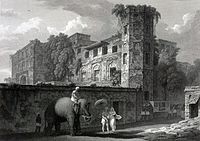 BATRA KATRA
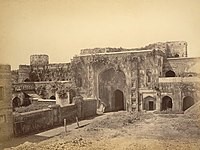 Bara Katra is reported to have been built between 1644 and 1646 AD by Mir Abul Qasim, the diwan (chief revenue official) of Mughal Prince Shah Shuja, the second son of the Mughal Emperor Shah Jahan and Empress Mumtaz Mahal. He was the governor of Bengal and Odisha and had his capital at Dhaka. The building follows the traditional pattern of Central Asian caravanserais and is embellished as per Mughal architecture. Originally it was enclosed a quadrangular courtyard.
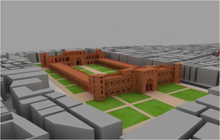 Abul Qasim al-Husaini at-Tabtaba as-Simnani built this edifice, endowing it with twenty-two shops, attached to it, on the rightful and lawful condition that the officials in charge of the endowment would expend the income derived from them upon the repairs of the building and upon the poor and that they should not take any rent from any deserving person alighting therein, so that the pious act may reflect upon the monarch in this world and that they should not act contrariwise, or else they would be called to account on the Day of Retribution.