

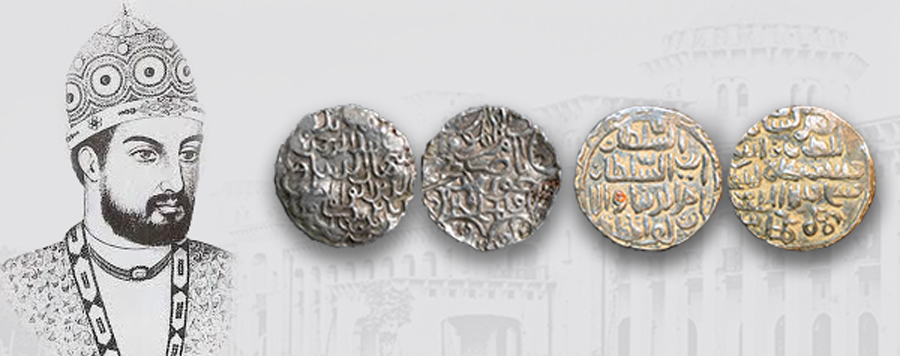
Bengal was absorbed into the Delhi Muslim Sultanate that stretched over large parts of the Indian sub-continent for over 300 years. The Bengal Sultanate began with Bakhtiar Khilji’s conquest of Gauda which was the capital city of Bengal under several kingdoms and one of the world’s largest cities at its time; the Bengal Sultanate was described by contemporary European and Chinese visitors as a relatively prosperous kingdom.
The Sultanate of Bengal (Bengal Sultanate in short), also known as Shahi Bangla, was an empire located in Bengal that spanned significant parts of the 14th, 15th, and 16th centuries.
With Arabic being its religious language and Bengali alongside Persian being the official languages, the Bengal Sultanate was the most powerful entity in the Ganges-Brahmaputra Delta and its imperial capital held on its own as one of the biggest cities on the planet. Even though the Bengal Sultanate was a Muslim kingdom, it was known for its tolerance to people of every faith.
The Sultanate was a thriving and bustling settlement with its royal capital city of Gaur being one of the most populous cities in the world at the time and becoming a major global trading power. It was incredibly successful in the production of silver coins, sericulture, textiles, gold, exports via shipping all over the globe, and production of muslin. Traders came from Europe, China, and all over the world.
The Muslims of that era were known for not just their bravery, piety, and trading abilities but also being renowned architects. They built impressive structures like the Adina Mosque in Pandua, the capital for the Sultanate, which mosque in that era was considered the biggest mosque in the Indian subcontinent.
In the struggle be free from the central rule under the Delhi Sultanate, Bengal not only tried to assert its independence, but also created a distinct socio-economic structure. The latter was not always similar to the general Indo-Islamic culture pervading under the Delhi Sultanate. A unique Bengali culture developed, which continued later on. The interaction between Islam and Hinduism ushered in a new era in the history of Bengal.
Acknowledgement and further reading:
https://www.researchgate.net/publication/314600830_Bengal_Sultanate_of