

Islamic architecture reflected in monuments like mosques, shrines and other monuments and buildings highlighted the styles of calligraphy and the development of sacred forms of Islamic art. Visual images inscribed in monuments held a spiritual importance for Muslims and also played an essential role in the rise of calligraphy in Islamic Architecture. There were many such inscriptions found in Bengal, that forms present day Bangladesh and West Bengal, and are living testimonies to the splendour that was Bengal during the Sultanate and Mughal rule. According to Professor Richard Eaton (author of The Rise of Islam and the Bengal Frontier, 1204-1760, “Nowhere was Islamic culture in Bengal expressed more vividly or distinctly than in the region’s rich tradition of public inscriptions, recorded either in Arabic or in Persian.”
Monuments
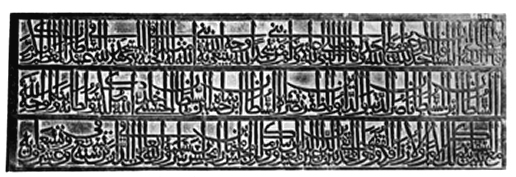
Inscription, Sultan Nusrat Shah, Sonargaon, Bangladesh 1522
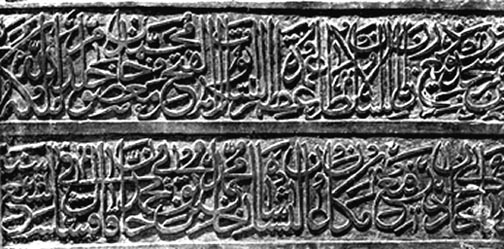
Inscription of Chatmohar Mosque, Masum Khan Kabuli (1581-82), Pabna, Bangladesh
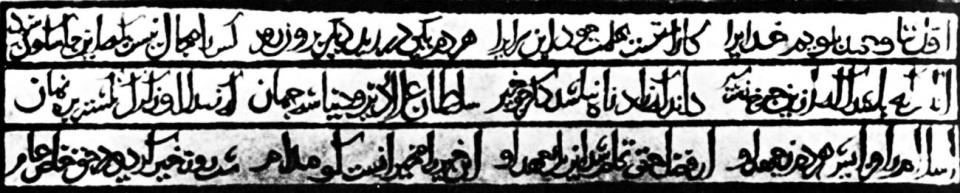
The earliest inscription found in Bengal is a bridge inscription from Sultanganj, Chapai Nawabganj district from the reign of Ala al-Din (1210–1213). It is now preserved in Varendra Research Museum, Rajshahi, Bangladesh
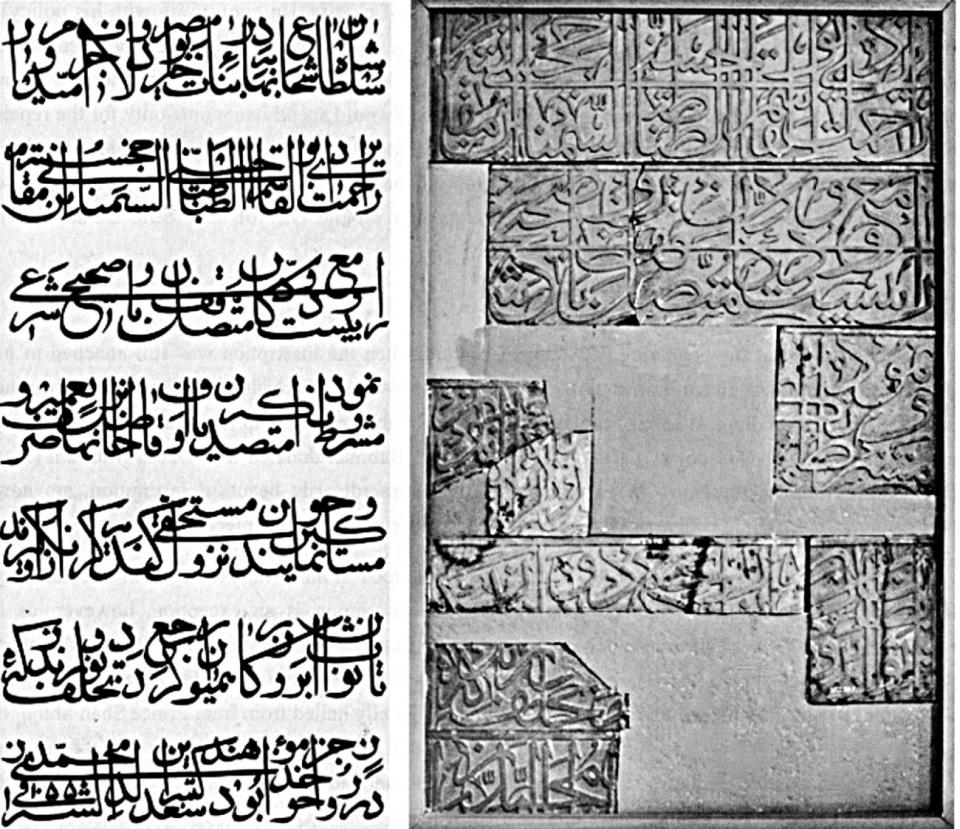
The Bara Katara inscription (and its full text, left), preserved in the National Museum, Dhaka, Bangladesh
Acknowledgement and further reading:
Muslim Calligraphy
A glimpse into the pre-modern Islamic culture in Bengal
Calligraphy – Beyond Pen and paper in Islamic Architecture