

 SAYED JAMALUDDIN MOSQUE
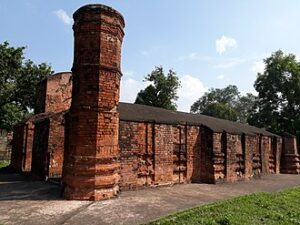 SAYED JAMALUDDIN MOSQUE
Sayed Jamaluddin Mosque is situated in the Saptagram area of Hooghly district in West Bengal, and is the only surviving monument from the Hussain Shahi period when Saptagram was a flourishing port and mint town. The last surviving witness of the glory days of this erstwhile capital of southern Bengal, the mosque is also a fine example of that phenomenon unique to Bengal – a terracotta mosque.
The Hussain Shahi dynasty ruled from 1494 to 1538. Alauddin Husain Shah, is considered as the greatest of all the sultans of Bengal for bringing a cultural renaissance during his reign.
 There is a stone foundation plaque which states that the Mosque was constructed by one Sayed Jamaluddin in the era of Sultan Nasiruddin Nasrat Shah, son of Sultan Alauddin Hussain Shah. It was reportedly built in 1529 by Jamaluddin, son of Sayed Fakhruddin of Amol, Iran. It is a unique brick built mosque decorated with terracotta ornamentation. It represents the terracotta elements of the Islamic architecture of Bengal. There are three tombs in the mosque complex.