Mawlana Ubaidullah Suhrawardy, a follower of Nawab Abdul Latif of Calcutta and Syed Ahmed Khan of Aligarh, was affiliated with the Mohammedan Literary Society founded by Nawab Abdul Latif, Central National Mohammedan Association founded by Sir Syed Ameer Ali, Bengal Social Science Association and other organisations in Kolkata.
If the nineteenth century India produced eminent Islamic scholars and reformers like Sayyid Ahmad Shahid, Sir Sayyid Ahmad Khan, Muhammad Qasim Nanotwi and Shah Ismail Shahid, then Bengal also produced prominent Islamic thinkers and reformers like Haji Shariatullah, Titu Mir, Mawlana Karamat Ali Jaunpuri and Nawab Abdul Latif. Since these scholars and reformers lived at a very difficult time in the history of the subcontinent, it is not surprising that their understanding of, and approach to, Islam varied depending on their local circumstances.
Like their co-religionists in other parts of India, the Muslim population of Bengal at the time were going through considerable social, political, economic and cultural uncertainty and upheaval. Just as the Muslim leaders of India responded to these challenges and difficulties in their own ways, the Muslim scholars and reformers of Bengal also adopted different reformist approaches in order to arrest the decline of Islamic thought and culture, and reinvigorate Muslim societies of Bengal.
As such, the main purpose of Haji Shariatullah and Titu Mir’s reformist movements was two-fold, namely to cleanse and purify the religious beliefs and practices of the Muslims from local un-Islamic influences and to improve the socio-economic condition of their people. By contrast, Nawab Abdul Latif wanted to improve the educational condition of the Muslims of Bengal by formulating a fresh educational philosophy and methodology underpinned by traditional Islamic values and principles. In doing so he paved the way for Muslims to move into further and higher education in large numbers, thus breaking the cycle of educational poverty and underachievement in the Muslim communities of Bengal. During this period, another pioneering and influential Muslim personality emerged who became known as the ‘father of traditional Islamic learning and scholarship’ in Bengal; he was none other than Mawlana Ubaidullah al-Ubaidi Suhrawardy.
According to his unpublished Persian autobiography, Ubaidullah al-Ubaidi Suhrawardy hailed from a noble Muslim family of Chitwah (Daspur) village in West Medinipur (located in present-day Indian State of West Bengal)……..
Read the biographical entry in THE MUSLIM HERITAGE OF BENGAL: The Lives, Thoughts and Achievements of Forty Great Muslim Scholars, Writers and Reformers of Bangladesh and West Bengal by Muhammad Mojlum Khan


 Ubaidullah Suhrawardy
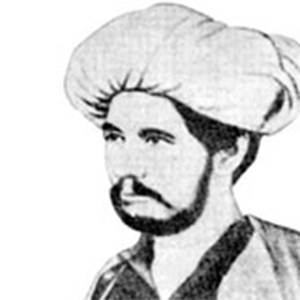 Ubaidullah Suhrawardy